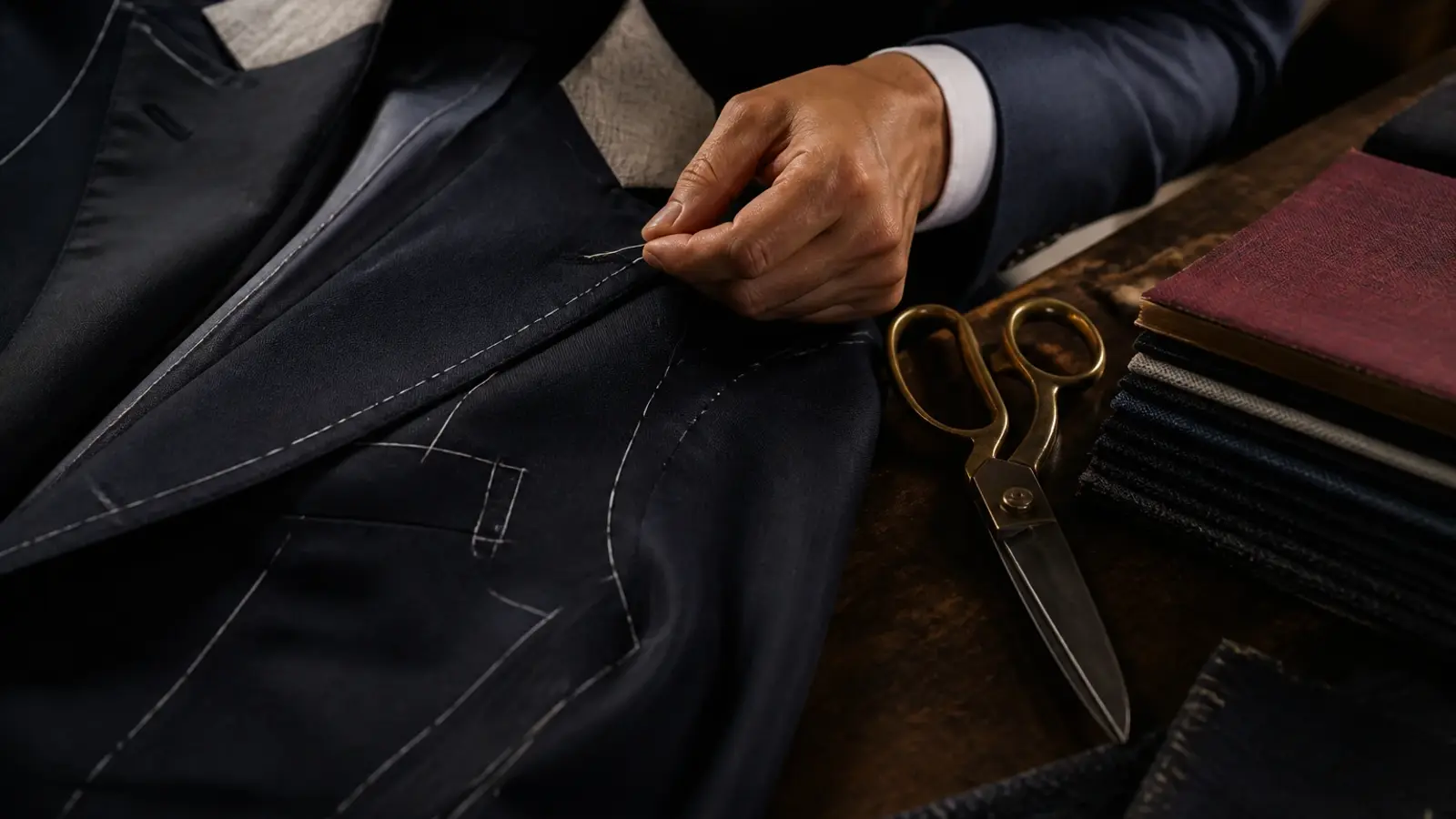
Cloth is the first decision of every commission because everything else — lining, structure, even the cut — negotiates with it. Here is the map the house uses at every fitting.
Weight is not warmth alone
Cloth weight, in grams per metre, affects drape, crease recovery and how the garment sounds when you move. Lighter cloths (around 230–260g) breathe and pack; mid weights (270–310g) hold a line through three seasons; heavier flannels (330g+) own the winter. Warmth comes from fibre and weave as much as weight, which is why the two are chosen together.
The weaves that matter
Plain weave and tropical
Open, airy, honest. The summer answer — crisp to the eye, cool on the shoulder, happiest unlined.
High-twist wool
The travelling tailor’s favourite: a springy yarn that refuses to crease, wears like iron and looks composed from boarding gate to dinner. The default recommendation for clients who live out of a suitcase.
Twill and serge
The classic diagonal. Drapes beautifully, tailors cleanly, forgives a long day. The four-season workhorse most wardrobes are built on.
Flannel
Brushed, soft, mat. Winter’s cloth — deep colour, quiet texture, pairs with knitwear and serious weather.
Herringbone and tweed
Character weaves. Herringbone brings pattern without noise; tweed brings heritage and wind resistance. Both reward clients who want one garment to carry a whole personality.
Linen and blends
Linen alone creases beautifully and unapologetically. Wool–linen and silk–wool blends keep the breath and lose the chaos — the Riviera compromise that actually works.
A season-by-season shortlist
Spring: high-twist in mid greys and blues. Summer: fresco, tropical, open weaves; silk–wool for evenings. Autumn: twill and early flannel as the light turns. Winter: flannel, tweed, wool–cashmere for the coat conversation.
Climate cases from our route
Zürich in January asks for flannel and a serious overcoat; Nice in August asks for open weave and unlined jackets; Frankfurt in April asks for the four-season twill that does both weeks. This is why cloth is chosen with the tailor who knows which city you wear it in.
Choosing at the fitting
Give the tailor three inputs: the occasion, the cities, the rhythm of wear. The shortlist that comes back will be two or three cloths, not forty — chosen so the decision is a pleasure instead of an exam.