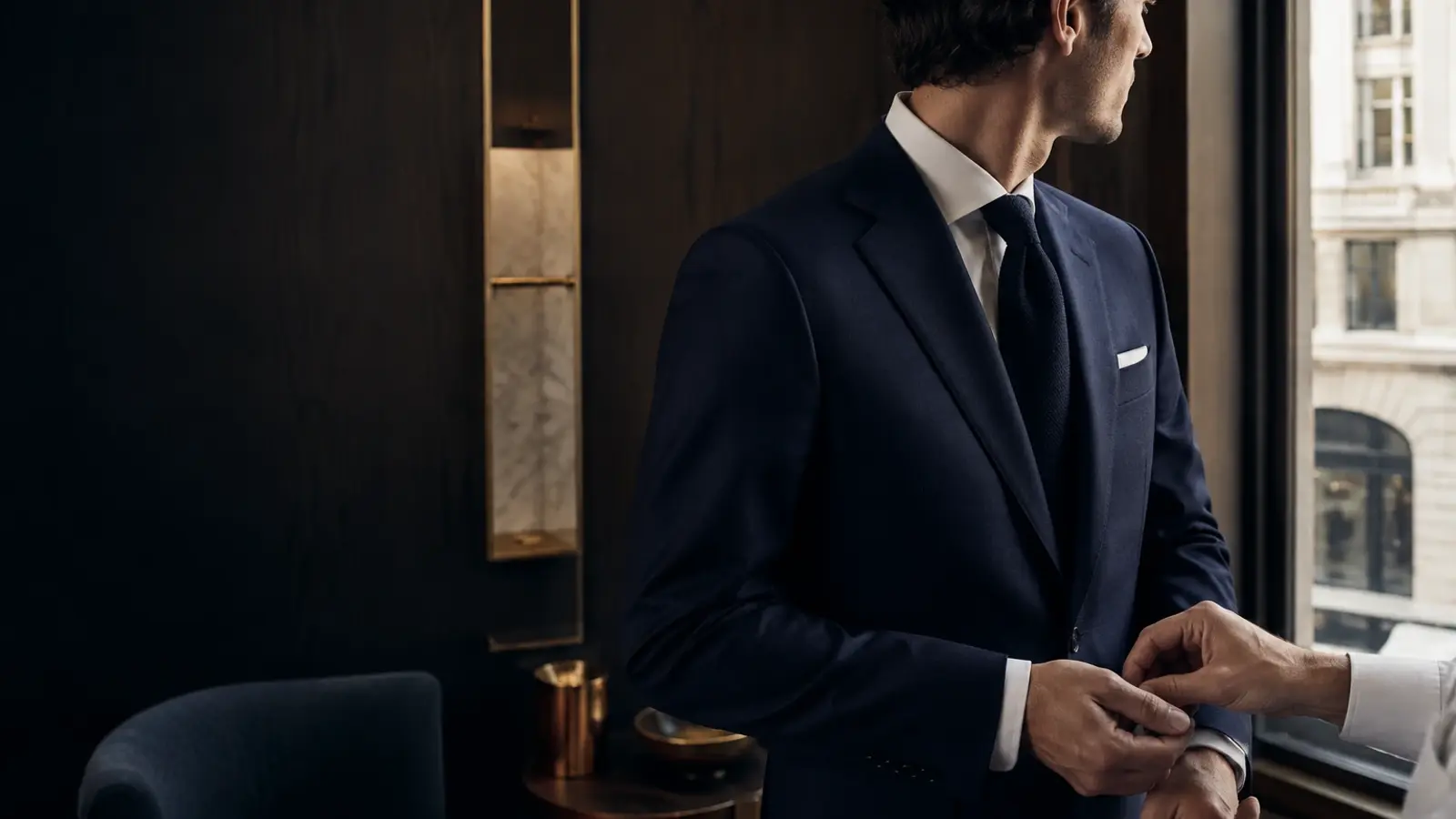
Most men have worn a suit that was the right size and the wrong shape. The difference between the two is the entire argument for a personal pattern.
The mirror lies about size
Size is a number attached to an average body. Shape is how you actually stand. A garment cut for the average will fight you at exactly the points where you differ — and everyone differs somewhere.
Shoulders first
The shoulder is where tailoring is won. Sloped, square, proud or forward: the pattern must start from your shoulder, not negotiate with it. This is the first thing observed at a fitting and the hardest thing for a size chart to know.
Stance and balance
How you carry weight — forward, back, one hip favoured — changes where a jacket wants to sit and where it will strain. Posture notes in the Fit Passport exist precisely so the pattern pre-empts these pulls.
Proportion: the quiet lever
Collar height, button stance, lapel width, jacket length, trouser rise: adjusted together for your line, they make a garment look inevitable. Adjusted for a chart, they make it look borrowed.
What changes with time
Bodies move — training, travel, years. The house keeps your pattern and its notes, so a commission two years later starts from the body you are now. This is why returning clients describe the second suit as “the first one, but better”.
Why observation beats measurement
Algorithms can interpolate numbers. Only a person can watch you cross a room and know what the cloth must do. It is the part of bespoke no form can reproduce — and the reason the house still measures you in person, in your city, before anything is cut.